Heyzo2257 Mai Yoshino Jav Uncensored Hot Better Updated
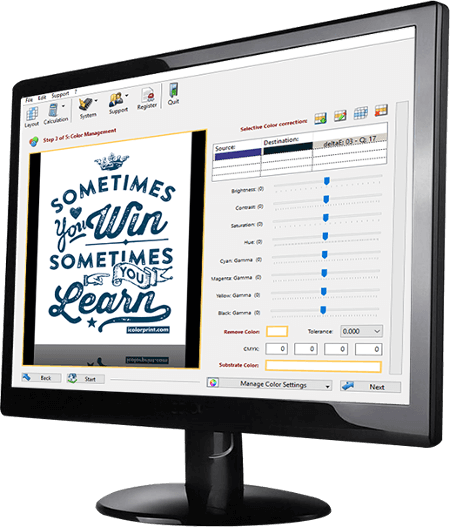
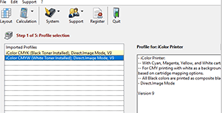
UNINET® has developed a series of software packages to enhance your IColor printing experience. The IColor® TransferRIP and ProRIP and ProRIP Essentials packages make it simple to produce spot color overprint and underprint in one pass. The Absolute White RIP helps you use an Absolute White Toner Cartridge in a converted CMYK printer, and create 2 pass prints with color and white. The IColor® SmartCUT suite allows your A4/Letter sized printer to produce tabloid or larger sized transfers! Use one or more with the IColor® 500, 600 and 800 series of transfer printers.
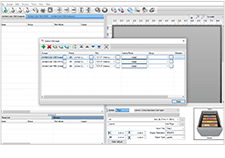
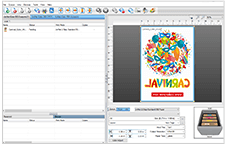
Use the IColor® ProRIP software to print white as an underprint or overprint in one pass.
This professional version is designed for higher volume printing with an all new interface. Design files can be printed directly from your favorite graphics program, as well as imported directly into IColor® ProRIP. heyzo2257 mai yoshino jav uncensored hot better
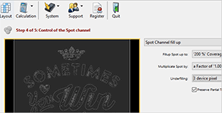
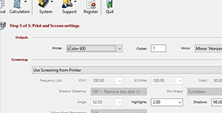
The IColor® ProRIP software allows the user to control the spot white channel feature. Three cartridge configurations are available: Spot color overprinting, where white is needed as a top color for textiles; Spot color underprinting for printing on dark or transparent media where white is needed as a background color and standard CMYK printing where a spot color is not needed. No need to create additional graphics with different color configurations – the software does it all – and in one pass! Enhance the brilliance of any graphic with white behind color! In the neon-soaked district of Akihabara, Haruto lived
Compatible with Microsoft Windows® 8 / 10 / 11 (x32 & x64) only. For the global consumer, Japan is no longer
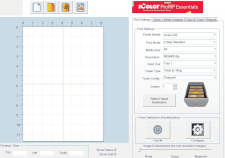
A simplified version of ProRIP which includes all of the most commonly used features of ProRIP with an easy to use interface. This Essentials version simplifies the printing process and allows the user to print efficiently and quickly without any training. All of the important and frequently used aspects of the software are included in this version, while all of the ‘never used’ or confusing aspects of the software are left out.
Comes standard with the IColor®540 and 560 models and is compatible with the IColor 550 as well.
Does not work with IColor 500, 600, 650 or 800 (yet).
Improvements over the ‘Standard’ ProRIP:
In the neon-soaked district of Akihabara, Haruto lived a double life. By day, he was a "salaryman," navigating the rigid hierarchies of a Tokyo marketing firm where silence and wa (harmony) were the unspoken laws. He bowed at the precise angle required for his seniority and spoke only in polite keigo.
Noh theater, older and more minimalist, offered the opposite: ma (the space between actions). This concept of silence and negative space is crucial to understanding Japanese pacing in film and television—a willingness to hold a silent reaction shot for seconds longer than Western audiences expect.
(woodblock prints), calligraphy, and martial arts (Kendo, Judo, and Sumo), creating a bridge between the past and present. Aesthetic Sensitivity
The Japanese entertainment industry has a long history, dating back to the Edo period (1603-1868). Traditional forms of entertainment, such as Kabuki theater, Noh theater, and Ukiyo-e woodblock prints, were popular during this time. With the introduction of Western culture in the Meiji period (1868-1912), Japan's entertainment industry began to modernize, and new forms of entertainment, such as cinema and radio, emerged.
Idol culture is a significant part of Japanese entertainment, with many young artists being trained and promoted by talent agencies. Idols, or "aidoru," are typically young performers who sing, dance, and act, often in highly produced music videos and live performances. Groups like AKB48, Morning Musume, and Johnny's & Associates have gained massive followings in Japan and have been successful internationally.
The "Otaku" economy has evolved into a massive experiential market that directly impacts tourism and retail.
For the global consumer, Japan is no longer a distant country; it is a second home, visited daily via screen, controller, or page. As the industry adapts to AI, VTubers, and new global markets, one thing remains certain: Japanese entertainment will continue to be weird, wonderful, and wildly influential. It doesn't just reflect the culture; it actively rewires the world's imagination.
In the neon-soaked district of Akihabara, Haruto lived a double life. By day, he was a "salaryman," navigating the rigid hierarchies of a Tokyo marketing firm where silence and wa (harmony) were the unspoken laws. He bowed at the precise angle required for his seniority and spoke only in polite keigo.
Noh theater, older and more minimalist, offered the opposite: ma (the space between actions). This concept of silence and negative space is crucial to understanding Japanese pacing in film and television—a willingness to hold a silent reaction shot for seconds longer than Western audiences expect.
(woodblock prints), calligraphy, and martial arts (Kendo, Judo, and Sumo), creating a bridge between the past and present. Aesthetic Sensitivity
The Japanese entertainment industry has a long history, dating back to the Edo period (1603-1868). Traditional forms of entertainment, such as Kabuki theater, Noh theater, and Ukiyo-e woodblock prints, were popular during this time. With the introduction of Western culture in the Meiji period (1868-1912), Japan's entertainment industry began to modernize, and new forms of entertainment, such as cinema and radio, emerged.
Idol culture is a significant part of Japanese entertainment, with many young artists being trained and promoted by talent agencies. Idols, or "aidoru," are typically young performers who sing, dance, and act, often in highly produced music videos and live performances. Groups like AKB48, Morning Musume, and Johnny's & Associates have gained massive followings in Japan and have been successful internationally.
The "Otaku" economy has evolved into a massive experiential market that directly impacts tourism and retail.
For the global consumer, Japan is no longer a distant country; it is a second home, visited daily via screen, controller, or page. As the industry adapts to AI, VTubers, and new global markets, one thing remains certain: Japanese entertainment will continue to be weird, wonderful, and wildly influential. It doesn't just reflect the culture; it actively rewires the world's imagination.
Use the IColor® TransferRIP software to print white as an underprint or overprint in one pass.
Designed for every day, short to mid run use, the IColor® TransferRIP software allows the user to control the spot white channel feature. Two cartridge configurations are available: White overprint, where white is needed as a top color for textiles; and white underprint for printing on dark or transparent media where white is needed a round color. No need to create additional graphics with different color configurations – the software does it all – and in one pass! Enhance the brilliance of any graphic with white behind color!
Compatible with Microsoft Windows 7 / 8 / 10 (x32 & x64) only.