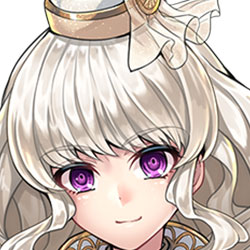
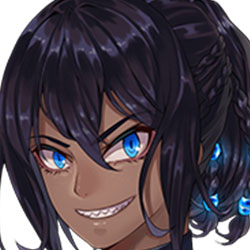
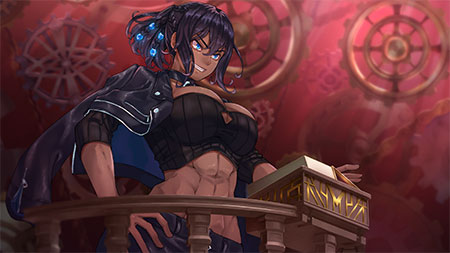
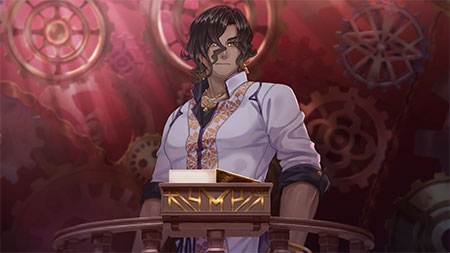
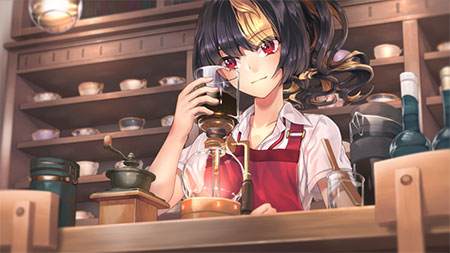
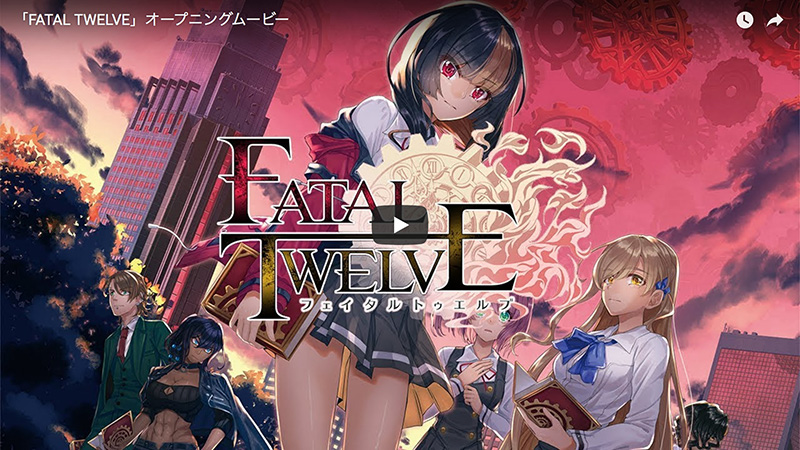
"Good evening, my lovely little slaves to fate."
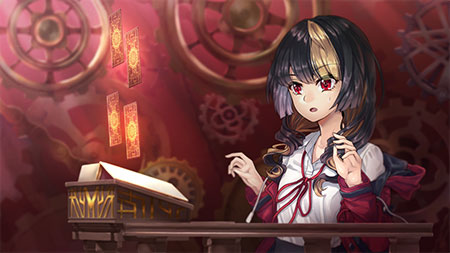
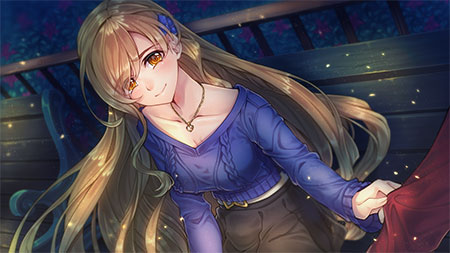
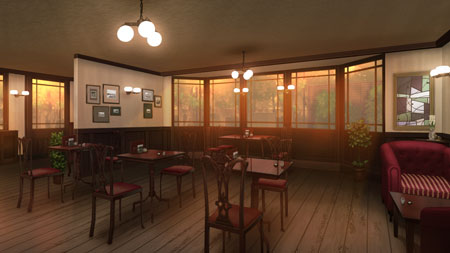
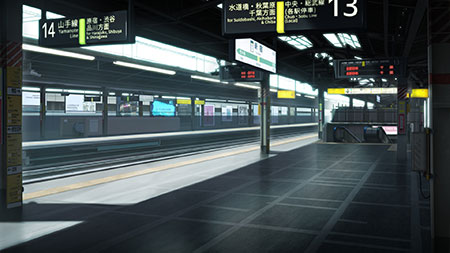
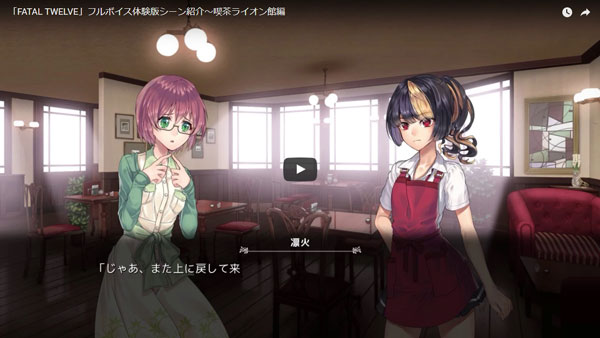
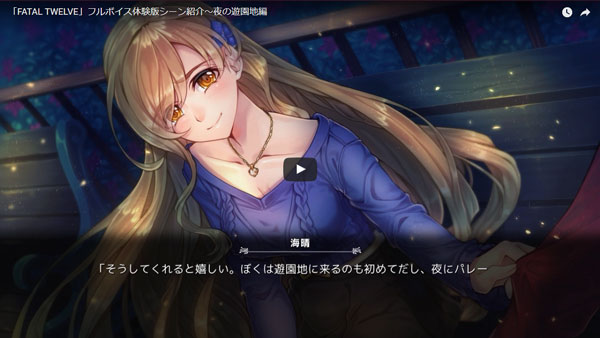
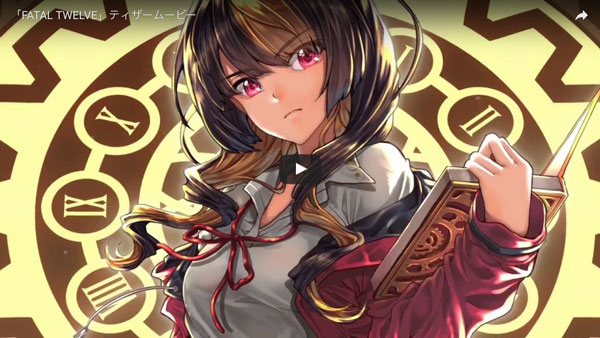
Shishimai Rinka was a highschooler who ran a small café named Lion House in place of her grandmother. She lived her life much like any other person her age, but one day, she was caught up in an explosion while returning home on the train alongside her friend, Hitsuji Naomi. In an attempt to save her friend's life, she shields her on instinct the moment the explosion goes off, losing her life in the process. However, before she knew it, she was back at Lion House, happily chatting with her friends as if nothing had happened in the first place.
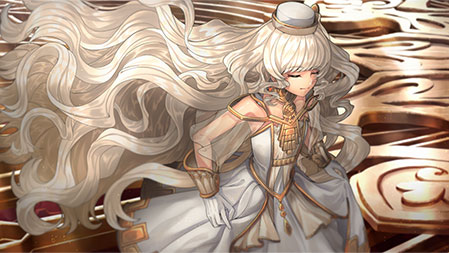
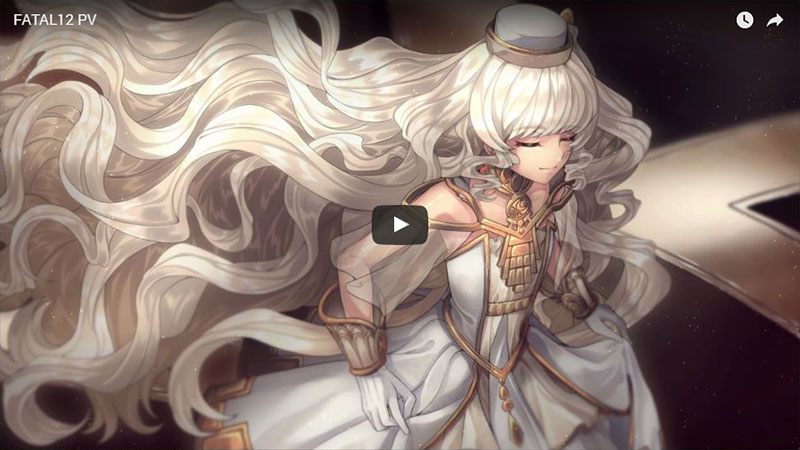
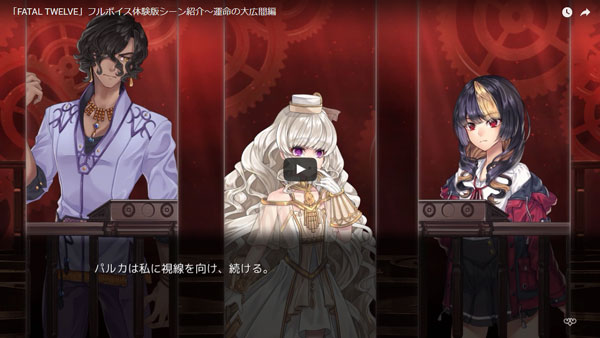
A few days later, she found herself in a strange world. Here she met Parca, an odd girl claiming to be a goddess. It turns out that she had somehow become a participant in Divine Selection, a ritual carried out over twelve weeks by twelve people, which allowed them to compete in order to undo their deaths. What shocked Rinka most of all, however, was the presence of her friend Mishima Miharu amongst the twelve.
In order to make it through Divine Selection, one must eliminate others by gathering information regarding their name, cause of death and regret in the real world, then "electing" them.
This turn of events would lead to her learning about the truth behind her death, as well as her own personal regrets. She would also come to face the reality that Miharu was willing to throw her life away for her sake, as well as the extents to which the other participants would go to in order to live through to the end.
Far more experiences than she ever could have imagined awaited her now, but where will her resolve lead her once all is said and done...?
In the span of a single generation, the landscape of human distraction has evolved from a scheduled luxury into an omnipresent, on-demand utility. From the gritty realism of a prestige drama on a streaming platform to the fleeting, fifteen-second dopamine hit of a viral dance challenge, entertainment content and popular media have become the primary lens through which we interpret the world, define our identities, and escape our realities.
AI integration, immersive experiences, and high-value fandoms . Consumers now spend an average of 13 hours and 40 minutes per day xxx48hot
This symbiosis is dangerous and exhilarating. On one hand, fan campaigns can save a canceled show (e.g., Brooklyn Nine-Nine). On the other hand, toxic fandom—brigading, review-bombing, and harassing creators—now wields veto power over artistic expression. Beyond the Screen: How Entertainment Content and Popular
: Gaming has moved from a niche activity to a dominant entertainment platform, with global revenue forecast to grow to $323.5 billion Key Trends Redefining Content AI-Generated Media Consumers now spend an average of 13 hours
The neon hum of Neo-Veridia never slept, but tonight, the glow felt heavier. Elias sat in a cramped pod, his eyes reflecting the rapid-fire scroll of the "Omni-Feed." In 2084, entertainment wasn’t something you watched; it was something you lived, breathed, and—if you weren't careful—lost yourself in.
The first rule of modern media is that boundaries have dissolved. Ten years ago, "entertainment content" meant movies, TV shows, and music. "Popular media" meant newspapers, magazines, and radio. Today, these streams have crashed into each other, creating a raging river of convergence.
Popular media doesn't just reflect society; it often shapes it. This is a strong angle for a sociology or communications-focused paper.
In the span of a single generation, the landscape of human distraction has evolved from a scheduled luxury into an omnipresent, on-demand utility. From the gritty realism of a prestige drama on a streaming platform to the fleeting, fifteen-second dopamine hit of a viral dance challenge, entertainment content and popular media have become the primary lens through which we interpret the world, define our identities, and escape our realities.
AI integration, immersive experiences, and high-value fandoms . Consumers now spend an average of 13 hours and 40 minutes per day
This symbiosis is dangerous and exhilarating. On one hand, fan campaigns can save a canceled show (e.g., Brooklyn Nine-Nine). On the other hand, toxic fandom—brigading, review-bombing, and harassing creators—now wields veto power over artistic expression.
: Gaming has moved from a niche activity to a dominant entertainment platform, with global revenue forecast to grow to $323.5 billion Key Trends Redefining Content AI-Generated Media
The neon hum of Neo-Veridia never slept, but tonight, the glow felt heavier. Elias sat in a cramped pod, his eyes reflecting the rapid-fire scroll of the "Omni-Feed." In 2084, entertainment wasn’t something you watched; it was something you lived, breathed, and—if you weren't careful—lost yourself in.

The first rule of modern media is that boundaries have dissolved. Ten years ago, "entertainment content" meant movies, TV shows, and music. "Popular media" meant newspapers, magazines, and radio. Today, these streams have crashed into each other, creating a raging river of convergence.
Popular media doesn't just reflect society; it often shapes it. This is a strong angle for a sociology or communications-focused paper.